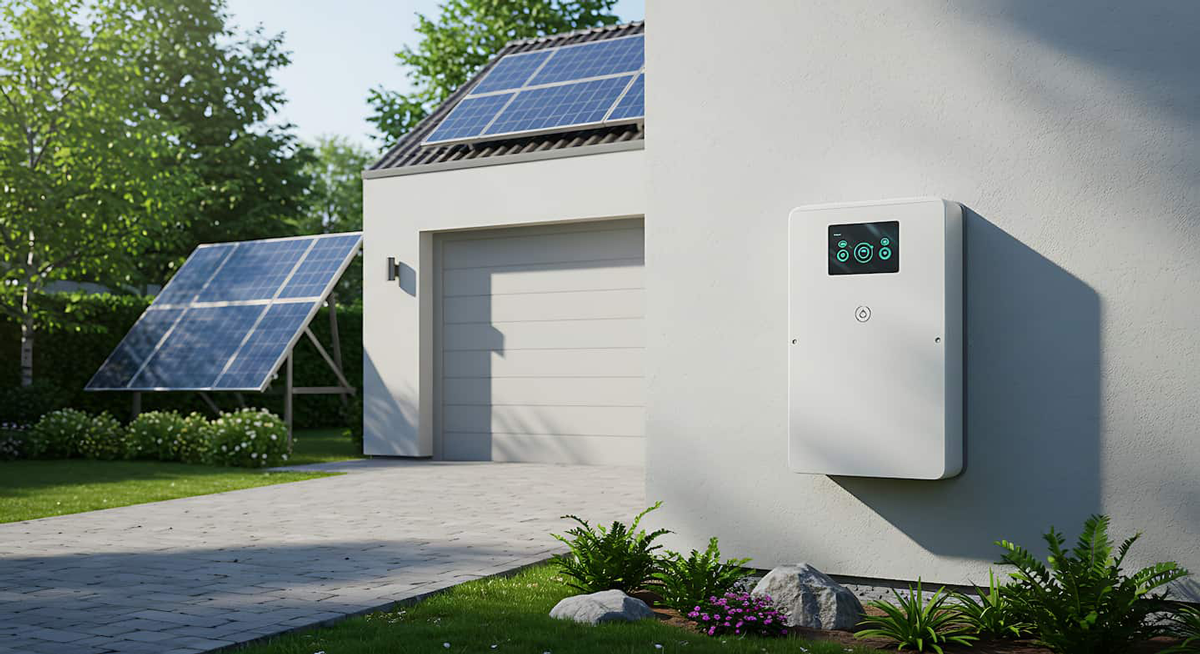
It is a common misconception among homeowners that installing solar panels guarantees uninterrupted power during a grid failure. In reality, standard grid-tied solar energy systems are designed to shut down immediately when the main power grid goes down. This is a safety measure engineered to prevent “back-feeding”—where solar power is sent backward into the utility lines, potentially posing a fatal hazard to utility workers repairing the grid.
To keep your home running when the neighborhood goes dark, you need a system equipped with solar battery storage. By pairing your panels with a dedicated battery backup and a hybrid inverter, you can dynamically isolate your home from the utility grid and maintain power.
Below, we break down exactly how these systems function, the core components that make them work, and the critical limitations to keep in mind when designing your backup system.
How the System Operates in an Outage: Step-by-Step
The transition from a grid-reliant home to an independent power-producing system happens in a fraction of a second through a coordinated technological sequence.
1. Grid Monitoring
Your hybrid inverter continuously tracks the incoming AC voltage and frequency of the utility grid. It acts as the brain of your setup, monitoring the stability of the grid.
2. Automatic Isolation (Islanding)
The second the grid fails, an automatic transfer switch or smart gateway detects the drop in voltage. Within milliseconds, it mechanically disconnects your electrical panel from the utility network. This process, known as islanding, creates a self-sustaining microgrid on your property, ensuring zero electricity leaks back to the street.
3. Battery Power Delivery
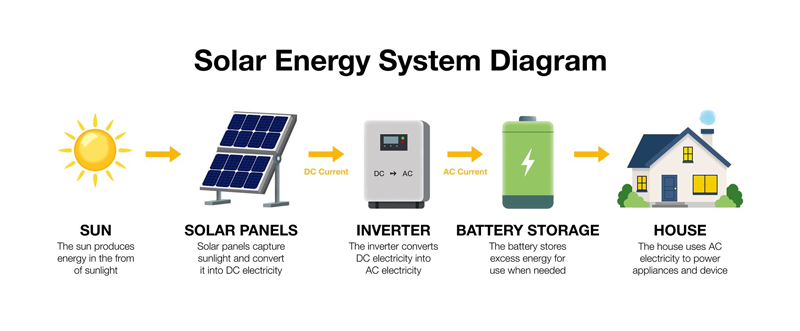
Once the home is isolated, the system instantly routes the stored Direct Current (DC) energy from your battery bank into the hybrid inverter. The inverter converts this DC electricity into Alternating Current (AC) electricity, which safely powers your home’s active circuits.
4. Daytime Recharging & Generation
If the blackout lasts into the next day and the sun is shining, your solar panels do not remain dormant. While standard systems remain shut off, a hybrid system keeps the panels active. The solar panels generate power to run your active household loads directly, and any excess, unused electricity is routed straight into the battery bank to recharge it for the night.
5. Solar Throttling
When your battery storage is completely charged and your solar generation exceeds your home’s immediate energy demand, the inverter dynamically throttles down (or temporarily deactivates) the solar panels. This prevents overcharging and maintains system equilibrium.
6. Seamless Grid Reconnection
Once the utility grid is restored and stabilizes for a set period, the hybrid inverter synchronizes its internal AC wave frequency with the grid and safely reconnects your home. Normal net-metering and power consumption resume automatically.
The Key Components of a Solar-Plus-Storage System
To achieve energy resilience during an outage, five distinct components must work together.
| Component | Primary Function |
| Solar Panels | Capture sunlight and convert it into DC electricity during daylight hours. |
| Battery Bank | Stores chemical energy to be discharged at night, during cloudy periods, or during grid blackouts. |
| Hybrid / Multimode Inverter | Manages the bidirectional flow of electricity, converts DC to AC, and simulates a “fake” grid signal to keep panels producing power during an outage. |
| Transfer Switch / Gateway | Rapidly isolates your home’s electrical system from the external grid when a power loss is detected. |
| Critical Loads Panel | A secondary subpanel that separates your most essential circuits from heavy-draw appliances. |
Practical Backup Limitations You Must Consider
While a solar battery backup provides peace of mind, managing expectations regarding system capabilities is essential to avoid running out of power when you need it most.
Partial vs. Whole-Home Backup
Most residential battery installations are configured as partial-home backups. High-draw appliances—such as central air conditioners, electric water heaters, and EV chargers—require more starting current than standard residential batteries can continuously output.
By utilizing a Critical Loads Panel, your installer isolates vital circuits to ensure your refrigerator, Wi-Fi router, home office, medical equipment, and select lights remain functional, leaving heavy loads off to protect your storage reserves.
Inverter Output Capacity vs. Battery Capacity
It is important to distinguish between how much energy your battery holds (measured in kilowatt-hours, or kWh) and how much power your inverter can deliver at any single moment (measured in kilowatts, or kW).
The Capacity Rule: Your battery size determines how long you can run your appliances, but your inverter capacity determines how many appliances you can turn on at the exact same time. Attempting to run a microwave, a toaster, and a hair dryer simultaneously may trip the inverter’s overload protection, even if your battery is fully charged.
“Black Start” Capabilities
If a multi-day winter storm or hurricane hits and you run your battery down to 0% overnight, the system faces a challenge: it needs electrical power just to boot up and instruct the solar panels to start charging again.
Standard solar batteries can get stuck in a “brick” state if completely drained. Advanced energy storage systems, however, include black start capabilities. This feature reserves a tiny fraction of battery power specifically to wake the system up and restart solar generation the next morning once daylight returns.
Tailoring Your Energy Resilience Strategy
At Sun Power Systems, we believe in solar and energy storage scaled to your exact context. There is no one-size-fits-all solution for backup power—especially in areas like Florida, where seasonal storms and grid reliability present unique challenges.
Designing a solar-plus-storage pathway requires evaluating your property’s structural context, identifying your household’s absolute priorities, and connecting you with the right installation partners to execute the plan safely.