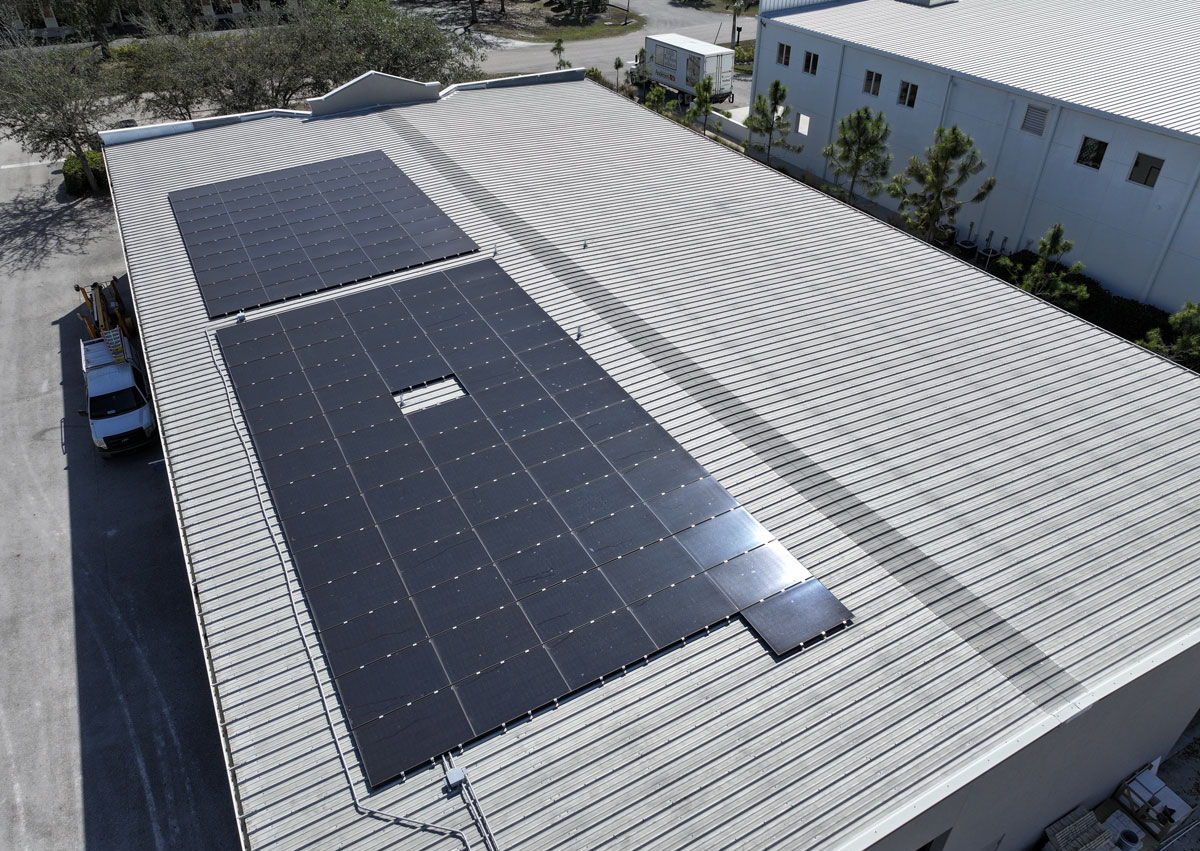
Operating a business in Florida comes with a distinct set of operational challenges. Chief among them is the high cost of climate control. With commercial electricity rates susceptible to market volatility, forward-thinking organizations are looking for ways to stabilize their overhead.
Fortunately, the Sunshine State provides a built-in advantage. By averaging 5.4 peak sun hours per day, Florida commercial properties sit beneath an untapped energy resource. Transitioning to commercial solar panels allows businesses to turn underutilized roof space or land into high-yield capital assets that lower operating expenses, deliver aggressive tax advantages, and provide long-term fiscal predictability.
For companies evaluating this transition, partnering with an experienced advisory team like Sun Power Systems streamlines the pathway. By focusing on site discovery, stakeholder alignment, and proper engineering execution, Florida enterprises can maximize the financial and operational rewards of going solar.
1. Slashing Operational Overhead
Energy costs represent a massive variable expense for commercial entities. Deploying an on-site solar array converts a volatile operational expense into a fixed, predictable asset.
Immediate Utility Bill Reduction
The most direct impact of a commercial solar installation is a dramatic drop in monthly utility expenses. Depending on the available surface area and the specific design of the system, commercial solar installations typically reduce monthly grid-electricity expenses by 50% to 90%. These immediate operational savings immediately free up working capital that can be reinvested into core business operations, inventory, or facility upgrades.
Daytime Load Offsetting
Florida businesses face intense HVAC cooling loads, particularly during the hot afternoon hours when electricity consumption peaks. Commercial solar power perfectly aligns its peak production curves with this peak demand.
By generating electricity on-site exactly when the facility requires it most, businesses can mitigate expensive daytime consumption charges and high demand fees levied by utility companies during peak operating windows.
Net Metering Security
Florida’s regulatory framework offers excellent structural support for commercial solar through net metering policies. Major investor-owned utilities, including Florida Power & Light (FPL) and Duke Energy, are required to credit commercial customers on a 1-to-1 basis for any excess electricity their systems generate and roll back into the grid. This ensures that every kilowatt-hour produced—even when a facility is closed over the weekend—retains its full financial value.
2. Capitalizing on Stacked Financial Incentives
The true profitability of commercial solar becomes clear when examining the federal, state, and corporate tax mechanisms available in Florida. By “stacking” these incentives, commercial entities can reduce total net system costs by 40% to 55%.
| Incentive Type | Benefit Mechanism | Financial Impact |
| Federal Investment Tax Credit (ITC) | Direct reduction of federal corporate income tax liability under Section 48E. | 30% of total system installation costs. |
| MACRS Depreciation | Accelerated asset depreciation enabling rapid corporate cost recovery. | Deduct up to 85% of system value within a 5-year window. |
| Florida Sales Tax Exemption | 100% exemption on solar energy equipment and installation purchases. | Immediate 6% upfront savings on capital expenditures. |
| Florida Property Tax Exemption | Statutory exemption (FS 193.624) on the added real estate assessment value. | 0% increase in property taxes resulting from solar upgrades. |
These interconnected tax advantages minimize upfront friction, allowing corporate CFOs and stakeholders to justify the investment with highly favorable balance sheet economics.
3. Accelerating Return on Investment (ROI)
Commercial solar installations are no longer viewed merely as sustainability initiatives; they are high-performing capital investments that outpace traditional financial vehicles.
Short Payback Periods
Thanks to the combination of intense local solar irradiance and stacked tax credits, the historical timeline required to break even on a commercial system has compressed significantly. Most Florida businesses experience an incredibly short payback period of just 5 to 7 years.
Long-Term Net Cash Flow
Once the system clears its initial breakeven window, the financial dynamics shift entirely to pure profit. Commercial solar panels boast an operational lifespan of 25 years or longer. Following the payback period, the system provides near-free electricity for the remaining decades of its life, delivering predictable, long-term cash flow directly to the bottom line.
Real Estate Appreciation
Equipping a commercial property with solar infrastructure drives immediate real estate appreciation. Because solar assets lower net operating costs (NOI), the underlying property value increases. Buildings with lower utility bills inherently attract premium tenants, command higher lease rates, and secure higher appraisal valuations if the property is brought to market.
4. Enhancing Energy Security & Corporate Governance
Beyond the financial metrics, commercial solar provides critical operational resilience and strengthens corporate positioning.
Grid Independence and Price Predictability
Utility rates maintain a consistent upward trajectory, driven by fuel costs and grid infrastructure overhauls. On-site power generation insulates companies from volatile utility price fluctuations and sudden annual rate spikes. By generating power locally, operations managers can lock in fixed energy costs for the next quarter-century.
Extreme Weather Resilience
Florida’s hurricane seasons pose an annual threat to business continuity. When grid-tied commercial solar systems are paired with advanced battery storage systems, critical infrastructure remains operational during major grid outages. This integration ensures that vital assets—such as cold storage units, data centers, logistics hubs, and medical equipment—remain fully powered when regional utility lines fail.
ESG and Brand Equity
Modern consumers, business partners, and institutional investors favor organizations with transparent sustainability practices. On-site solar serves as a visible commitment to Environmental, Social, and Governance (ESG) targets. Demonstrating a reduced carbon footprint enhances brand equity, helps fulfill corporate supply chain mandates, and attracts eco-conscious clients.
Developing Your Commercial Solar Pathway
Every commercial facility presents unique architectural, financial, and logistical variables. A successful project depends on thorough early-stage discovery rather than generic promises.
At Sun Power Systems, based in Miami, FL, we guide commercial businesses through a structured, transparent process designed to outline clear operational realities from the start.
- Facility-Context Discovery: Evaluating your physical building constraints, roofing age, structural capacity, and historical energy loads.
- Stakeholder Alignment: Working alongside your executive team, CFO, and property managers to map out financial expectations, ROI metrics, and tax strategies.
- Installer Coordination: Connecting your business with verified, highly engineered installation pathways tailored to large-scale commercial deployments.
Whether you operate a retail center, an industrial warehouse, or a corporate office complex, optimizing your energy strategy begins with a precise, professional assessment.