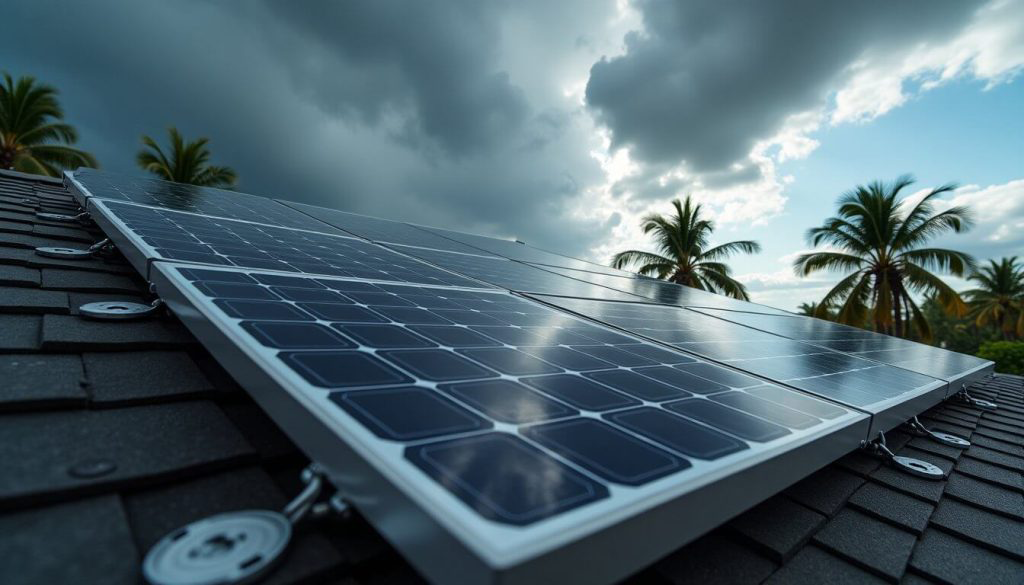
For Florida homeowners, June through November brings a familiar sense of vigilance. As tropical systems develop over the Atlantic, preparing your home for extreme weather becomes a top priority. If you are considering transitioning to clean energy – or if you already have panels on your roof – one critical question likely stands out: How do solar panels perform during the Florida hurricane season?
The short answer is reassuring: modern solar energy systems are remarkably resilient. Engineered to survive Category 5 force winds and severe impacts, the physical technology holds up incredibly well against extreme weather. However, mechanical survival is only half the battle. A system’s ability to actually keep your lights on when the local electrical grid goes dark depends entirely on how your system is configured.
Let’s dive deep into the engineering, state building regulations, power grid dynamics, and essential pre-storm practices that dictate how solar systems handle Florida’s toughest storms.
Physical Durability: Engineered for Category 5 Winds
A common misconception is that solar panels are fragile sheets of glass waiting to be ripped apart by severe wind loads. In reality, residential rooftop solar arrays rarely suffer structural damage from wind forces alone. This is due to a combination of strict local manufacturing mandates and robust structural attachment techniques.
Wind Speed Thresholds and Pressure Ratings
Standard commercial and residential solar modules are built to tolerate sustained winds of up to 140 mph. For premium tiers, that threshold scales up to an impressive 180 mph gusts. To put that in perspective, a Category 5 hurricane carries sustained winds of 157 mph or higher.
To achieve legal compliance in high-velocity hurricane zones (HVHZs) across South Florida, systems are measured by extreme pressure ratings:
- Downward Pressure: Rated to withstand up to 5,400 Pascals (Pa), protecting against heavy water and debris loads.
- Upward Uplift Force: Rated to endure up to 4,000 Pa of aerodynamic uplift, preventing the wind from tearing the panels away from the roof deck.
High-Impact Resistance
Solar components feature heavy-duty tempered glass designed to survive high-speed projectiles. Before hitting the market, modules must pass rigorous impact testing against 1-inch solid hailstones traveling at speeds greater than 50 mph. This prevents stray tree branches and airborne debris from shattering the photovoltaic cells.
Structural Roof Reinforcement
Solar arrays do not simply sit on your roof; they are deeply anchored into the building’s skeleton. Correctly engineered aluminum racking systems are bolted directly into the underlying wooden roof rafters using heavy-duty lag screws. This distributed anchoring layout creates an integrated surface layer that can actually improve the structural stability of the entire roof.
Power Generation and Grid Behavior: The Backup Truth
While your solar panels are highly likely to survive a major hurricane visually intact, their ability to supply electricity during a post-storm utility outage is a completely different story. Many homeowners are surprised to learn that a standard solar setup will not work during a blackout.
Standard Grid-Tied Systems
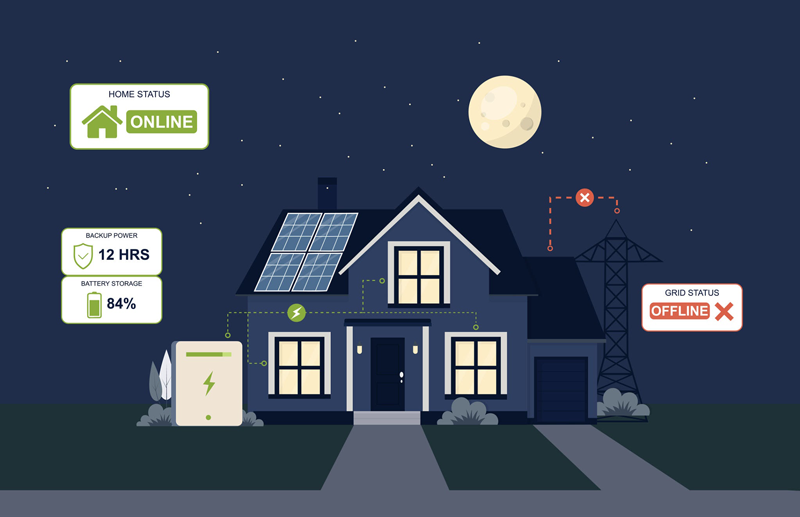
If your property features a standard grid-tied solar system without a dedicated battery bank, your power will shut off automatically the moment the grid goes down.
This shutdown is a mandatory regulatory safety feature known as anti-islanding protection. If your solar array continued pushing electricity back into the neighborhood infrastructure while utility crews were working on downed power lines, it could severely injure or electrocute those technicians. Consequently, when the utility grid fails, your standard solar inverter turns off instantly.
Solar-Plus-Storage Systems
To keep your appliances running when the power grid goes dark, your system must include a home battery backup system. A solar-plus-storage configuration solves the grid-tied dilemma by instantly isolating your home from the external utility grid when a blackout occurs. This creates a secure, self-sustaining loop known as an intentional island.
Post-Storm Recharging
The true value of a solar battery emerges in the days following a major storm event. While traditional fossil-fuel generators rely on finite gasoline or propane supplies – which become difficult to source due to closed stations and ruptured supply chains – a solar-plus-storage setup operates indefinitely.
Once the storm passes and daylight returns, the solar array immediately begins generating energy to run your critical household appliances while simultaneously routing excess current to recharge the depleted battery bank. This creates a continuous cycle of clean, reliable energy throughout multi-day grid blackouts.
Essential Pre-Season Preparation Steps
To maximize the performance and safety of your alternative energy system before hurricane season reaches its peak, you should integrate these essential steps into your annual home maintenance checklist:
1.Schedule a Professional Inspection:Pre-Season Check.
Have a certified solar technician examine the structural integrity of your array. They will verify that there are no loose mounting clamps, rusted bolts, or compromised structural components within the aluminum racking framework.
2.Trim Surrounding Vegetation:Debris Prevention.
Examine the tree canopy surrounding your roofline. Cut back heavy, overhanging tree branches that could snap during high winds and smash directly onto the tempered glass surfaces.
3.Verify Your Insurance Coverage:Financial Security.
Contact your homeowners insurance provider to confirm that your solar addition is explicitly declared under your current policy. Ensure that your coverage limits are calibrated to match the full replacement value of the entire energy system.
4.Document System Condition:Baseline Evidence.
Take clear, well-lit photographs and videos of the solar array from multiple angles. Having this baseline visual record is incredibly valuable if you ever need to file an insurance claim for storm-related damage.
5.Activate Smart Storm Software Features:Software Optimization.
If you use modern energy monitoring tools, check for automated weather settings. For instance, the Enphase App features a built-in “Storm Guard” mode. When the National Weather Service issues a severe storm warning, this feature overrides your normal consumption settings and automatically charges your battery storage bank to 100% capacity from the utility grid before the storm arrives.
Prepare Your Home for the Next Storm
Florida’s extreme weather calls for a power solution that is as tough as the climate itself. By combining durable physical panels with an intelligent home energy storage solution, you can successfully protect your asset investments and secure long-term energy independence when the grid fails.
Explore professional alternative energy installations and maintenance workflows by visiting our Services Page to speak with a clean energy expert today.