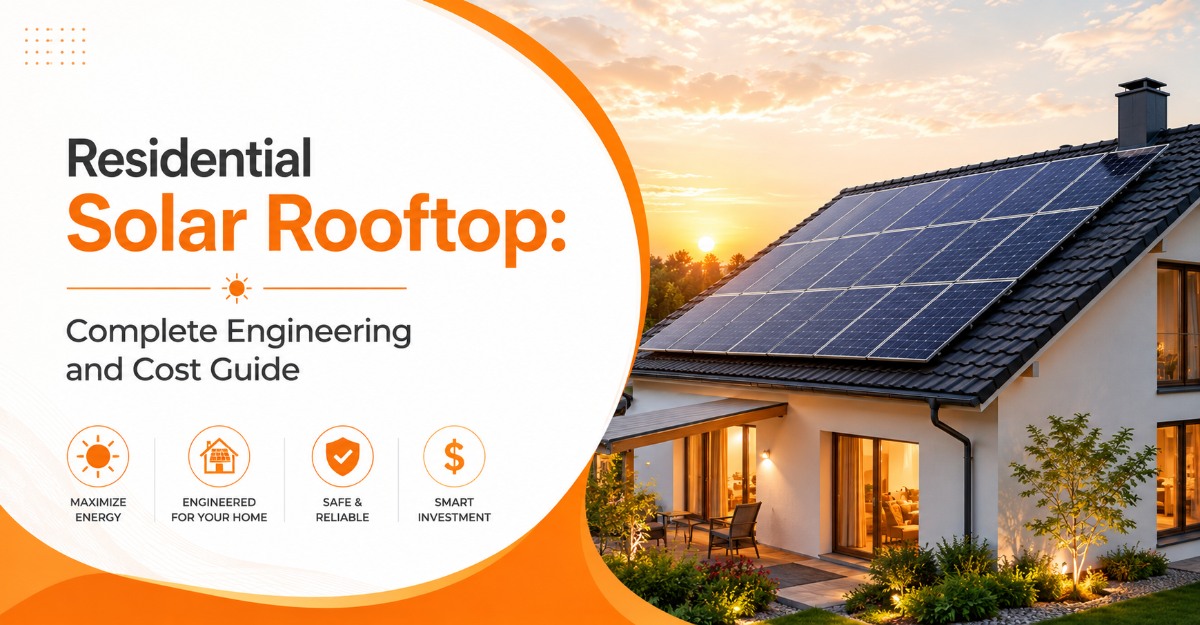
A residential solar rooftop is a decentralized photovoltaic generation system that converts raw solar irradiance into usable alternating current electricity. This infrastructure powers household appliances directly, stores surplus energy in local battery banks, and exports excess production back to the municipal grid for financial credits.
How Does a Residential Solar Rooftop Work?
A residential solar rooftop operates through a highly coordinated sequence of electrical conversions and distribution pathways. The system must capture variable sunlight, stabilize the resulting electrical current, match the specific voltage of the local utility grid, and route that power safely into the home. Understanding this mechanical flow reveals exactly how energy savings materialize on a monthly utility bill. Modern systems utilize integrated software to monitor this entire process in real time.
Solar Irradiance Capture
Rooftop photovoltaic panels absorb sunlight using layered silicon semiconductor cells. When photons strike these cells, they knock electrons loose, creating an electrical flow known as Direct Current (DC). The total DC output depends heavily on panel orientation, seasonal sun angles, and ambient temperatures. Panels perform best in cool, bright conditions because excessive heat increases electrical resistance within the silicon cells.
Direct to Alternating Current Inversion
Standard household appliances cannot utilize raw DC electricity. A solar inverter intercepts the DC power and translates it into Alternating Current (AC) electricity. This conversion process standardizes the power to 120 or 240 volts, matching the exact frequency required by residential circuit breakers. The efficiency of this conversion process typically ranges from 95% to 98%, with the remainder lost as minimal heat.
Distribution and Household Consumption
Once converted, the AC power flows directly into the main electrical service panel of the home. The home draws this solar electricity first. If the solar array produces exactly what the household consumes, the home draws zero power from the external municipal grid. This primary self-consumption phase provides the highest financial value for the homeowner.
Export and Battery Storage
When a residential solar rooftop generates more electricity than the home requires, the surplus takes one of two paths. In a standard setup, the excess energy flows backward through a bidirectional utility meter into the public grid, earning the homeowner financial credits through a process called net metering. In homes equipped with energy storage, the surplus fills an on-site lithium-ion battery bank for use during the night or during grid blackouts.
What Are the Main Types of Solar Energy Systems?
Choosing the correct architecture for a solar array dictates how the system behaves during grid outages and influences the total initial cost. The solar industry categorizes systems into three distinct operational models based on their relationship with the municipal power grid and their reliance on local battery storage. Each configuration requires different permitting standards and hardware components.
Grid-Tied Configurations
Grid-tied setups connect directly to the local utility network without any local battery storage. These systems offer the lowest barrier to entry and the fastest financial payback periods. However, grid-tied architectures lack blackout protection. Safety regulations require these systems to shut down entirely during a utility power outage to prevent back-feeding electricity into power lines where repair crews might be working.
Hybrid Configurations
Hybrid systems combine standard grid connections with dedicated on-site battery storage. During normal operation, the system powers the home, charges the local battery, and exports any remaining excess to the grid. When the utility grid fails, an automatic transfer switch isolates the home, allowing the battery to power critical household loads indefinitely. This setup offers energy security at a moderate price premium.
Off-Grid Configurations
Off-grid setups sever all physical connections to municipal power grids. These installations require massive battery banks and often incorporate backup diesel or propane generators to survive prolonged periods of poor weather. Off-grid systems carry the highest capital costs and demand precise electrical load management by the homeowner.
System Comparison Matrix
| Configuration | Upfront Capital Cost | Blackout Resilience | Hardware Complexity | Typical ROI Speed |
| Grid-Tied | Lowest ($10,000 – $18,000) | Zero (System goes dark) | Low | Fastest (6 – 8 years) |
| Hybrid | Moderate ($18,000 – $30,000) | High (Powers critical loads) | Medium | Slower (9 – 12 years) |
| Off-Grid | Highest ($30,000 – $60,000+) | Complete (Full independence) | Very High | N/A (Infrastructure cost) |
Component Technologies and Hardware Specifications
The physical components of a solar array determine long-term durability, visual aesthetics, and peak energy yields. Hardware selection requires balancing upfront budgets against total lifetime electrical production. A premium solar module paired with inadequate inversion technology will throttle system performance entirely.
Photovoltaic Panel Categories
Monocrystalline panels dominate the modern residential market due to their high efficiency ratings, typically ranging from 19% to 23%. Manufacturers slice these panels from a single, pure silicon ingot, resulting in a sleek black appearance. Polycrystalline panels offer a lower-cost alternative with efficiencies between 15% and 17%. These panels utilize melted silicon fragments, creating a fragmented blue aesthetic. Solar shingles serve directly as the roofing material, replacing traditional asphalt or tile. Shingles offer the best architectural integration but carry massive installation premiums.
Inverter Technologies
String inverters connect a series of panels into a single electrical circuit. If shading affects one panel, the output of the entire string drops. To combat this, installers pair string inverters with DC power optimizers located under each panel to isolate performance drops. Microinverters take a different approach entirely. These small units mount directly underneath every single panel, converting DC to AC at the source. This parallel architecture ensures that shading on one section of the roof never impacts the broader system.
Panel Specification Comparison
| Module Technology | Average Efficiency | Heat Tolerance (Temp Coeff) | Typical Aesthetic | Cost per Watt |
| Monocrystalline | 19% – 23% | Excellent (-0.35% / °C) | Solid black | $2.80 – $3.20 |
| Polycrystalline | 15% – 17% | Moderate (-0.45% / °C) | Speckled blue | $2.30 – $2.60 |
| Solar Shingles | 14% – 18% | Variable | Integrated roof | $4.50 – $6.00+ |
What Are the Financial Mechanics and Return on Investment?
The financial viability of a residential solar rooftop hinges on federal tax incentives, local utility rates, and system longevity. Solar arrays represent a heavy capital expenditure designed to yield decades of fixed energy costs. The exact payback window shrinks in regions with high electricity prices and expands in areas with cheap municipal power. According to the National Renewable Energy Laboratory (NREL, 2023), soft costs like permitting and customer acquisition now make up more than half of the total system price in the United States.
Homeowners generally evaluate solar economics using gross costs, net costs, and annual cash flows. The federal residential clean energy tax credit allows homeowners to deduct 30% of the total installation cost directly from their federal tax liability. This single incentive shifts the economics of rooftop solar from marginal to highly profitable in most geographic locations.
Financial Breakdown for a 6kW System
| Financial Metric | Typical Value | Practitioner Notes & Context |
| Total System Size | 6.0 kW DC | Covers roughly 70-90% of an average home. |
| Gross Installation Cost | $16,800 | Based on the $2.80 per watt industry baseline. |
| Federal Tax Credit (30%) | -$5,040 | Claimed during the subsequent annual tax filing. |
| Net Cash Outlay | $11,760 | The actual long-term cost to the homeowner. |
| Annual Power Output | ~8,700 kWh | Varies by roof azimuth, pitch, and local shading. |
| Annual Dollar Savings | ~ $1,479 | Assumes a baseline grid rate of $0.17 per kWh. |
| Breakeven Point | 7.9 Years | After year eight, energy generation is pure profit. |
Step-by-Step Installation and Permitting Process
Deploying a residential solar rooftop requires tight coordination between structural engineers, local municipal governments, and the utility provider. The physical installation represents only a fraction of the total project timeline. Bureaucratic approvals dictate the actual pace of deployment, often pushing project timelines to three full months from contract signing to final activation.
- Assess Feasibility and Structural Loads: Engineers evaluate the structural integrity of the roof rafters to ensure they can support an additional dead load of roughly 3 to 4 pounds per square foot. They also measure roof azimuth (south-facing is optimal) and calculate potential shading using satellite imagery.
- Design the Electrical System: Draftsmen create single-line diagrams detailing the exact wire gauges, conduit routing, and circuit breaker sizes required to handle the anticipated electrical loads safely.
- Secure Municipal and Utility Permits: Contractors submit the engineering diagrams to the local Authority Having Jurisdiction (AHJ) for building permits. Simultaneously, they file an interconnection request with the utility company to secure permission to export power to the grid.
- Install Racking and Hardware: Roofers locate structural rafters, drill penetration points, and inject industrial sealants to mount the aluminum racking rails. Electricians then secure the microinverters and solar modules to the rails while routing UV-rated wiring down to the main service panel.
- Complete Inspections and Activation: A municipal building inspector reviews the physical installation for fire code compliance. Following municipal approval, the utility company grants official Permission to Operate (PTO), allowing the homeowner to finally energize the system.
How Do You Prevent Common Solar Mistakes?
Homeowners frequently compromise the long-term yield of their system by overlooking basic structural prerequisites or misunderstanding utility rate schedules. A solar array operates as a 25-year asset. Short-term compromises during the design phase compound into massive financial losses over the lifespan of the equipment.
The most common structural error involves installing new panels over aging asphalt shingles. Removing and reinstalling a solar array to accommodate a mid-life roof replacement costs between $3,000 and $5,000. Financially, homeowners must avoid predatory Power Purchase Agreements (PPAs) and long-term solar leases. These financing structures complicate real estate transactions, as the new homebuyer must qualify to assume the lease. Direct cash purchases or specialized solar loans retain the asset value entirely within the homeowner’s equity.
Furthermore, ignoring local net metering shifts leads to poorly sized systems. Under policies like California’s NEM 3.0, utility providers slashed the compensation rates for exported solar energy. In these environments, oversizing a system without adding battery storage yields rapidly diminishing returns. The system exports cheap power to the grid during the day while the homeowner buys expensive power back at night.
Troubleshooting Routine Performance Issues
While solar arrays feature no moving parts, electrical disruptions and environmental factors can degrade system performance. Proactive monitoring catches minor faults before they eliminate a month of utility savings. Homeowners should check their system monitoring application weekly to establish a baseline for normal seasonal production.
Routine performance drops stem primarily from environmental factors. Heavy accumulation of dust, pollen, or bird droppings causes soiling losses that reduce overall array output by up to 5%. In localized setups, a newly grown tree branch can shade a string of panels, triggering disproportionate power drops if the system lacks DC optimizers.
Common Error Codes and Resolutions
| Symptom / Warning | Likely Technical Cause | Initial Homeowner Action | Requires Professional? |
| Zero System Output | Tripped main AC breaker | Check main electrical panel and flip breaker back to ON. | No (Unless it trips repeatedly) |
| Sudden Yield Drop | Inverter communication loss | Reboot the home WiFi router and reconnect the inverter portal. | No |
| Ground Fault Error | Moisture in junction box | Visually inspect roof wiring for rodent damage or exposed copper. | Yes |
| Individual Panel Dead | Failed bypass diode | Check module-level monitoring software to isolate the exact panel. | Yes (Covered by warranty) |
Frequently Asked Questions About residential solar rooftop
Do solar panels generate electricity on cloudy or rainy days?
Yes, photovoltaic panels still capture diffuse sunlight through cloud cover. Production drops to roughly 25% to 40% of their peak clear-sky capacity. Rain actually benefits the system by washing away accumulated dust, which improves efficiency on subsequent sunny days.
Will a standard residential solar rooftop provide power during a grid blackout?
No, a standard grid-tied system will shut down completely during a power outage. Inverters detect the grid failure and disconnect automatically to protect utility repair crews from live voltage. You must install a hybrid system with a battery block to maintain household power.
How long do solar panels and inverters actually last?
Tier-1 monocrystalline solar panels carry linear performance warranties guaranteeing at least 80% output at year 25. Standard string inverters face higher thermal stress and typically require replacement between years 12 and 15, while microinverters frequently carry 25-year warranties matching the panels.
What happens if I sell my house before the system pays for itself?
If you purchased the system via cash or a standard loan, the solar array transfers with the property and increases the home’s resale value. If you leased the equipment, the buyer must formally qualify for and assume the remainder of your solar lease contract.
Do I need to upgrade my main electrical panel for solar?
Many older homes with 100-amp service panels require a Main Panel Upgrade (MPU) to safely handle the back-fed solar current. An electrical engineer calculates the necessary busbar ratings during the design phase to determine if a 200-amp upgrade is legally required by code.