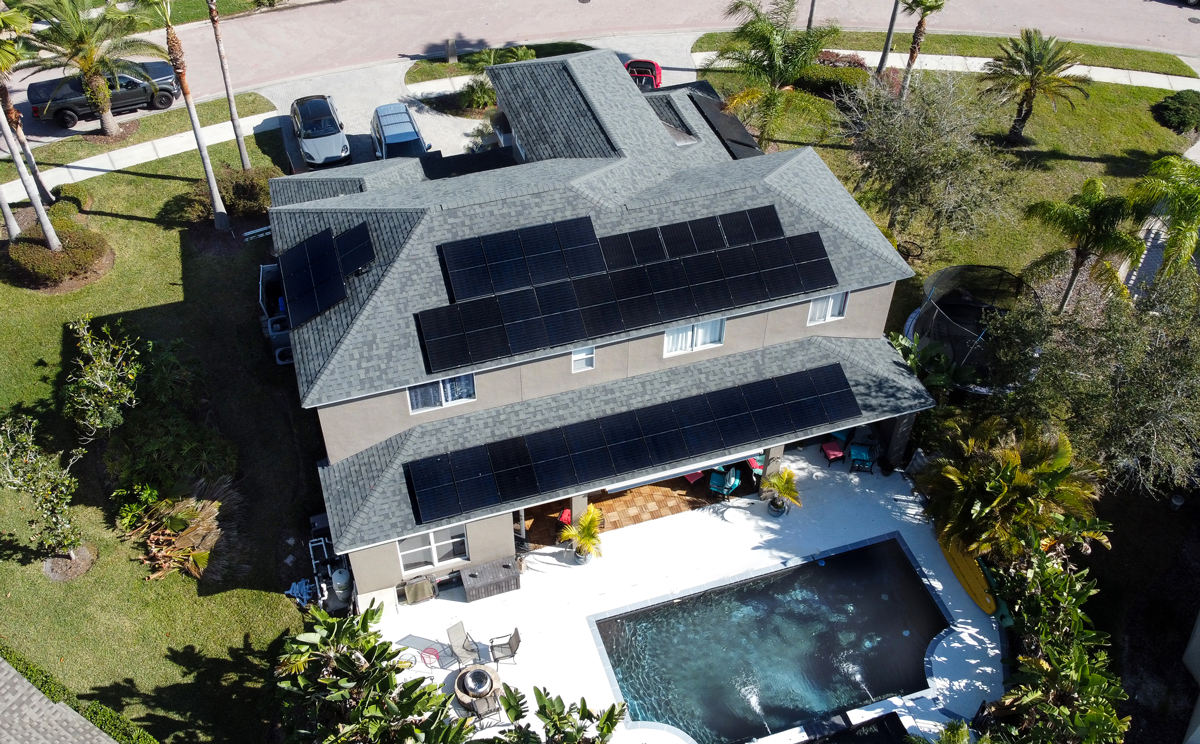
For Florida homeowners, the concept of going solar seems like a no-brainer. The Sunshine State averages over 230 sunny days a year, making it prime real estate for harvesting clean energy. Yet, as utility rates continue to fluctuate, many residents find themselves asking a critical question: Are solar panels actually worth it in Florida?
The short answer is yes. For the vast majority of Florida homeowners, investing in solar panels delivers a strong return on investment, long-term financial security, and immediate protection against rising electricity costs. However, going solar isn’t a one-size-fits-all equation. Whether it is worth it for your specific home depends heavily on a few core variables: your roof’s age, your financing strategy, and your current energy consumption.
Here is a transparent, data-driven look at the real costs, actual savings, and local incentives governing solar energy in Florida.
The Financials: Breaking Down Cost vs. Long-Term Savings
Evaluating solar energy requires looking past the initial price tag and calculating decades of offset utility bills. When you transition to solar, you are essentially pre-purchasing 25 to 30 years of electricity at a locked-in, predictable rate.
- Average Upfront System Cost: For a standard residential home requiring an 11.5 kW to 14.6 kW system, the initial price typically ranges between $20,000 and $34,960 before applying federal or state incentives.
- The Payback Period: The average time it takes a Florida homeowner to completely break even on their cash investment is 9 to 12 years.
- Decades of Free Electricity: Once you clear that payback window, the electricity your solar array generates for the rest of its life is essentially free.
- Total Long-Term Savings: Over a standard 25-year panel lifespan, Florida homeowners who purchase their systems save an estimated average of $56,517 on utility bills.
Florida-Specific Solar Incentives and Tax Breaks
Part of what makes Florida one of the most financially viable states for solar adaptation is its aggressive, pro-consumer legislative perks. Local policy actively protects your wallet from the moment your system is turned on.
1. 1:1 Net Metering Laws
By Florida law, major investor-owned utilities—including Florida Power & Light (FPL), Duke Energy, and TECO—must offer 1:1 net metering. This means that during peak daylight hours when your panels produce more electricity than your home consumes, the excess energy is sent back to the traditional grid. Your utility company is legally required to credit you at the full retail value for that power, lowering your bill during nighttime hours or overcast days.
2. 100% Property Tax Abatement
Normally, adding a major structural upgrade to your home increases its market value, which subsequently drives up your annual property taxes. Solar is an exception. Florida features a statewide Property Tax Exemption for residential solar. While your home equity will jump, your property taxes are legally shielded from increasing due to the added value of the solar array.
3. Sales Tax Exemption
Right out of the gate, upfront installation expenses are minimized. Florida waives its 6% state sales tax on all solar energy equipment and hardware, saving you thousands of dollars during the initial purchase phase.
4. The Federal Clean Energy Tax Credit
If you purchase and own your system, you qualify for the federal Residential Clean Energy Credit. This allows you to claim a significant percentage of the total installation cost as a direct credit against your federal income tax liability, instantly slicing down the net cost of your system.
Weighing the Pros and Cons of Florida Solar
To get an accurate picture of whether a solar array aligns with your property infrastructure, it is important to objectively weigh the benefits against the structural variables.
| Pros (Why It’s Worth It) | Cons (What to Watch Out For) |
| Increased Home Equity: Adds an average of 4.1% to 4.6% to your home’s total resale value. | High Initial Investment: Requires an upfront cash payment or securing a specialized solar loan. |
| Rate-Hike Protection: Locks in stable energy costs, insulating your household from unpredictable utility rate spikes. | Roof Age Constraints: If your roof needs replacing in less than 10 years, you will have to pay to detach and reinstall the panels later. |
| Exceptional Lifespan: Modern tier-1 solar panels easily last 25 to 30 years (or longer) with minimal degradation. | Insurance Adjustments: Certain Florida home insurance providers require extra personal liability coverage for large, tiered solar setups. |
Crucial Warning: The Truth About “Free Solar” Scams (Buy vs. Lease)
If you want solar panels to behave as a true financial asset, you should aim to own them—either via cash or a specialized credit union solar loan. Avoid entering into a solar lease or a Power Purchase Agreement (PPA).
Aggressive door-to-door sales representatives routinely canvas Florida neighborhoods pitching “free solar panels” or “zero-cost state programs.” True free solar does not exist. These are simply marketing traps designed to lock you into high-interest, long-term lease contracts.
Why Solar Leases Carry High Risks:
- Lost Incentives: With a lease or PPA, the solar installation company owns the panels. That means they keep the lucrative federal tax credit, not you.
- Real Estate Complications: Selling a home with a leased solar array can be incredibly difficult. Many Florida real estate transactions collapse entirely because prospective home buyers refuse to assume a 20-year lease contract tied to the property. When you own your panels, they transfer seamlessly to the buyer as a high-value, paid-off home asset.
Bring the Site. Define the Next Move.
At SunPower Systems, we believe navigating clean energy shouldn’t rely on generic, one-size-fits-all promises. True efficiency is scaled to context. Whether you are exploring residential solar, looking to integrate advanced energy storage/battery backup for storm resilience, or evaluating a large-scale commercial facility, our pathway always begins by looking directly at the unique realities of your property.
To help us build a tailored, realistic estimate of your potential payback window and long-term energy savings, consider these three questions:
- What is your average monthly electric bill? (This determines the scale and kW size of the array your property requires).
- How old is your current roof? (We evaluate if structural updates are needed before installation to protect your long-term investment).
- Do you plan to stay in your home for more than 5 to 7 years? (This helps map out your exact break-even timeline).
Let’s cut through the generic sales pitches and map out an honest, practical pathway for your property.
Contact SunPower Systems today to discuss your project, evaluate your site, and define your next move.