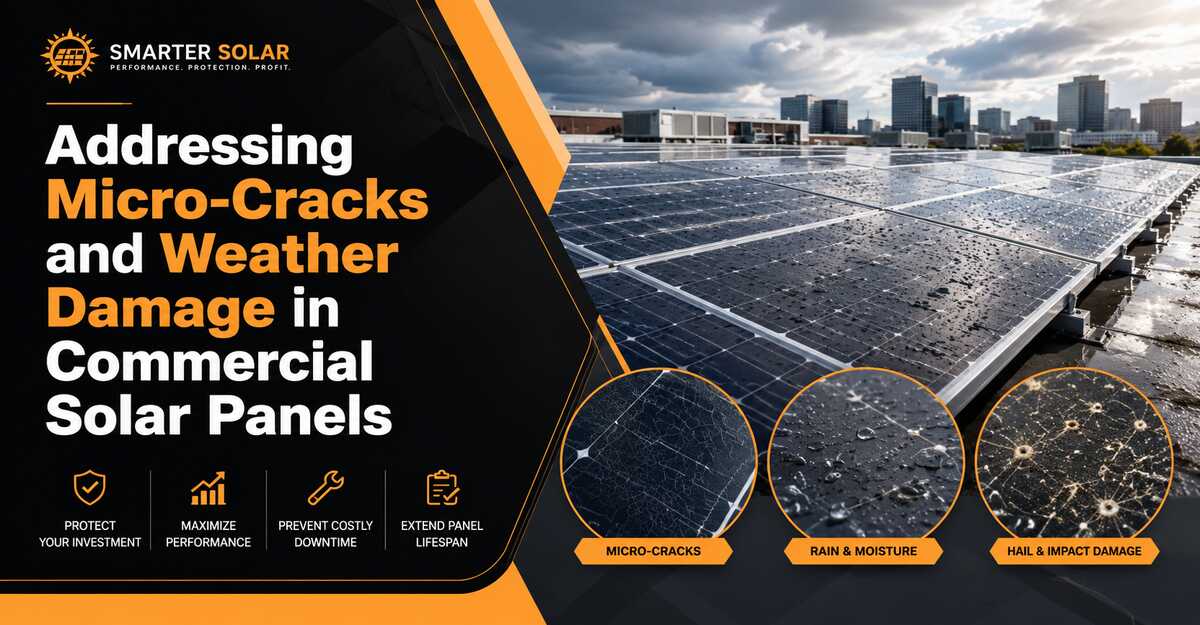
Addressing micro-cracks and weather damage in commercial solar panels requires a systematic process of thermal detection, string isolation, and targeted module replacement. System operators must utilize electroluminescence imaging to identify microscopic silicon fractures, allowing technicians to deploy protective coatings or module-level power electronics to restore full baseline energy production.
Key Facts at a Glance
- Micro-cracks disrupt electrical pathways, forcing cells into reverse bias and generating localized thermal hot spots exceeding 150°C.
- Module-level replacement costs typically range from $250 to $450 per panel, including labor and hazardous disposal.
- Electroluminescence (EL) imaging must be conducted at night to accurately capture the near-infrared emissions of fractured silicon wafers.
- Module-level power electronics (MLPE) retrofits can isolate underperforming, cracked panels to prevent them from degrading overall string voltage.
- Pressure washing solar panels creates extreme thermal shock, immediately worsening existing microscopic fissures in the protective glass.
What Causes Micro-Cracks and Weather Damage?
Micro-cracks and weather damage occur when mechanical stress, physical impact, or thermal cycling exceeds the tensile strength of the silicon wafers and protective glass. These environmental stressors compromise the structural integrity of the module, leading to immediate power degradation and long-term fire risks.
The Mechanics of Cell Micro-Fractures
Microscopic fractures in silicon wafers originate from improper handling, wind-induced vibrations, or extreme thermal expansion. When a silicon wafer cracks, it physically severs the internal electrical pathways. This disruption prevents electrons from flowing through the intended circuit.
Trapped electrons create localized high resistance within the solar cell. Because the affected cell can no longer generate its expected current, it becomes reverse-biased and begins dissipating power from the rest of the string as heat. The power dissipated by the defective cell is calculated by the relationship between the string current and the defect resistance:
$$P_{dissipated} = I_{string}^2 \times R_{defect}$$
This extreme heat generation creates a thermal hot spot. Left unmitigated, hot spots melt the ethylene-vinyl acetate (EVA) encapsulant and burn through the polymer backsheet, triggering catastrophic arc faults or roof fires.
Environmental and Weather Stressors
Weather damage physically degrades the external protection of the solar module. Hail impacts exceeding 25mm in diameter routinely shatter the tempered front glass, destroying the panel’s weather seal. Wind forces twist the aluminum framing, creating micro-fissures in the crystalline silicon matrix hidden beneath unbroken glass. Extreme temperature swings cause the internal material layers to expand and contract at different rates, leading to delamination and allowing moisture to penetrate the live electrical components.
How to Detect and Diagnose Panel Damage
Detecting panel damage requires a combination of daytime thermal scanning and nighttime electroluminescence imaging to correlate surface temperature anomalies with internal structural failures.
Step 1: Aerial Thermal Infrared (IR) Inspection
Drone-mounted radiometric thermal cameras detect the specific heat signatures of reverse-biased cells. Operators must fly drones over the array during peak sunlight (minimum 600 W/m² irradiance) to ensure maximum current flow and visible heat generation. Conducting thermal inspections under cloud cover or shading masks critical cell defects, rendering the data useless.
Step 2: Electroluminescence (EL) Imaging
EL imaging reveals the exact map of internal silicon fractures that thermal cameras cannot see. Technicians inject a controlled reverse current into the solar string at night. Intact silicon cells emit near-infrared light at wavelengths between 1000 and 1100 nm, while cracked or inactive areas remain dark. Specialized EL cameras capture this emission, providing a precise diagnostic map of mechanical damage across the entire commercial array.
Step 3: Insulation Resistance (ISO) Testing
ISO testing identifies moisture intrusion caused by weather-damaged backsheets or shattered glass. Inverters automatically flag ISO faults when the resistance between the live DC conductors and the grounding system drops below safe operational thresholds (typically less than 1 MOhm). Technicians utilize megohmmeters to isolate the exact string and module allowing current leakage to the ground.
What Are the Remediation Options and Costs?
System owners can choose between full module replacement, protective chemical coatings, or component-level bypass retrofits based on the severity of the damage and the remaining warranty life of the system.
| Remediation Strategy | Typical Cost per Module | Implementation Time | Best Used For |
| Module Replacement | $250 to $450 | 1 to 2 hours per panel | Shattered glass, severe hot spots, warranty claims. |
| Protective Coatings | $20 to $40 | 1 to 2 days per 100kW | Surface weathering, moisture prevention, proactive hail prep. |
| MLPE Retrofitting | $70 to $120 | 2 to 3 days per 100kW | Widespread hidden micro-cracking across out-of-warranty arrays. |
Module-Level Replacement
Module-level replacement completely removes severely cracked or shattered commercial panels and substitutes them with units possessing identical electrical specifications. This strategy completely restores the lost efficiency of the localized string and resets the product warranty for that position. Finding exact electrical matches for older panels presents a supply chain challenge, often requiring system owners to maintain a dedicated inventory of spare modules from the original batch.
Anti-Reflective and Protective Coatings
Applying liquid polymer or hydrophobic siloxane coatings seals micro-fissures in the top glass and prevents moisture intrusion. Technicians spray or roll these coatings directly onto the cleaned array. While this option significantly extends the life of weathered glass at a low capital cost, protective coatings cannot repair existing internal silicon cracks or reverse the electrical degradation caused by broken busbars.
Component-Level Bypass (MLPE Retrofits)
Installing module-level power electronics isolates underperforming panels, preventing them from dragging down the entire string voltage. Technicians retrofit direct current optimizers onto the racking beneath each affected panel. This strategy mitigates system-wide losses and introduces granular panel-level monitoring, though the installation requires high labor costs and introduces additional hardware failure points into the array.
How to Choose the Right Repair Strategy
Selecting the correct repair strategy depends entirely on the size of the facility, the age of the installation, and the operational goals of the energy asset manager.
Utility-Scale Operations (Greater than 1MW)
Utility-scale asset managers must maximize total energy yield while minimizing manual labor costs. Facilities over 1MW should rely on automated drone thermal imaging conducted annually. Operations and maintenance teams must stock a 2% spare inventory of exact-match replacement modules onsite during initial construction. When drone analytics identify hot spots exhibiting a temperature delta greater than 20°C above baseline, technicians must immediately execute physical module replacement rather than attempting localized repairs.
Commercial and Industrial Roofs (100kW to 1MW)
Commercial facility managers must balance fire safety and building insurance compliance with return on investment. C&I systems suffering from widespread micro-cracking due to age or wind events should deploy MLPE optimizers. Targeted physical replacement should only occur for individual panels demonstrating more than 15% absolute degradation, ensuring the repair budget focuses on catastrophic failures rather than marginal efficiency losses.
Common Remediation Mistakes to Avoid
- Walking on Solar Panels: Technicians stepping on modules during cleaning or maintenance instantly create catastrophic micro-cracks across multiple cells. Zero weight must ever be applied to the glass surface.
- Ignoring Small Hot Spots: Small thermal anomalies escalate into complete backsheet burn-throughs. Facilities must categorize and track all hot spots during annual inspections.
- Using Pressure Washers: High-pressure water thermally shocks hot glass. The rapid temperature change forces microscopic surface cracks to expand, while the water pressure strips the factory anti-reflective coating.
- Discarding Damaged Panels Improperly: Commercial solar panels contain heavy metals including lead and cadmium. Throwing damaged modules into standard commercial dumpsters violates environmental regulations and incurs severe fines.
Troubleshooting Common System Symptoms
Why is an Entire String Experiencing a Drop in Power?
Unexplained string-level power drops indicate either a single catastrophically failed module blocking current flow or widespread micro-cracking increasing total string resistance. Operators must review the inverter telemetry to confirm the voltage drop. Technicians deploy handheld thermal cameras to scan the underperforming string, locating localized hot spots. The permanent fix requires bypassing the faulty module via internal diodes or replacing the specific unit.
Why is the Inverter Reporting a Low Insulation Resistance Fault?
An ISO fault occurs when water physically contacts the internal electrical components of the solar array, creating a path to the ground. Technicians must visually inspect the panel backsheets for moisture bubbling, delamination, or weather-induced tearing. If the protective glass is intact but the backsheet is torn, technicians can patch the backsheet using certified solar repair tape. If the front glass is shattered, the panel requires immediate replacement.
Frequently Asked Questions
Can micro-cracks in solar panels be permanently fixed?
Internal silicon micro-cracks cannot be physically repaired. Remediation focuses entirely on electrical mitigation. Technicians install optimizers to bypass the damaged cell’s resistance, or they replace the entire module to restore the baseline output of the string.
Does standard commercial property insurance cover weather damage?
Commercial property insurance generally covers sudden and accidental physical damage caused by severe wind or hail. System owners must provide historical baseline output data and timestamped EL imaging to prove the specific weather event directly caused the internal micro-cracking.
How often should commercial arrays undergo thermal inspection?
Commercial solar arrays require radiometric thermal drone inspections annually. Facilities located in regions with high hail frequency or excessive wind shear should schedule supplementary inspections immediately following any major weather event to validate structural integrity.
What is the acceptable power degradation rate before replacing a panel?
Commercial solar panels degrade naturally at roughly 0.5% per year. System operators should mandate individual module replacement when localized weather damage or micro-cracking causes a panel’s output to drop more than 15% below its warrantied baseline capacity.