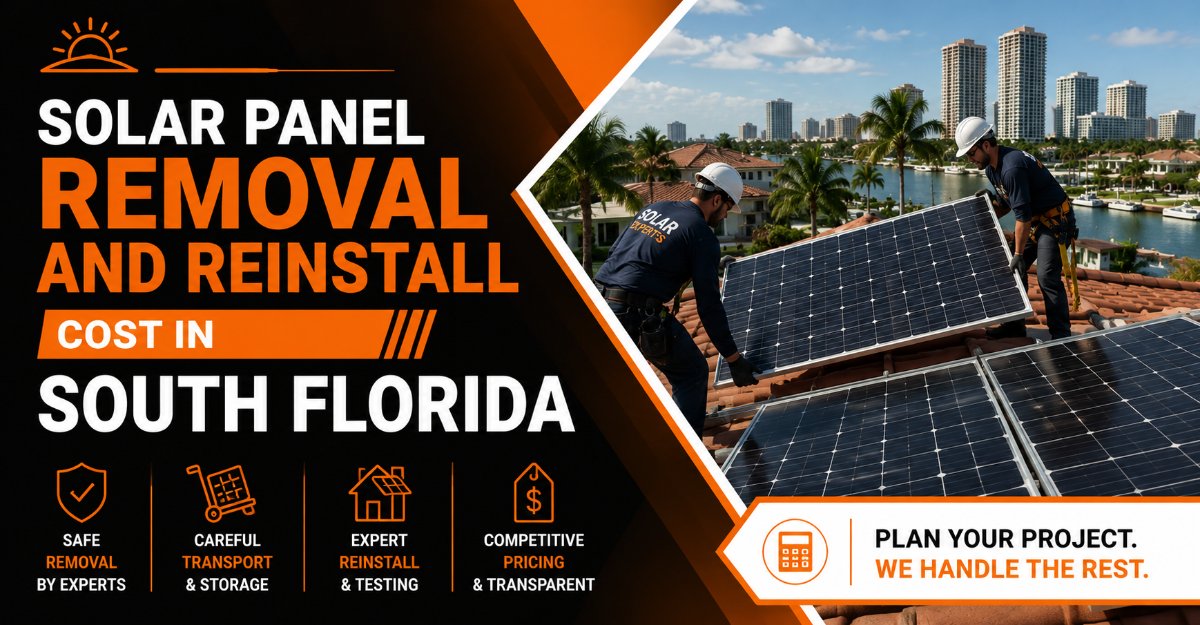
In South Florida, the average solar panel removal and reinstall cost typically ranges from $3,000 to $10,000 for standard residential arrays, translating to roughly $250 to $450 per panel. This highly specialized process known as a Detach and Reset (D&R) safely decommissions your photovoltaic system for roof replacement and re-anchors it to meet stringent high-velocity hurricane zone (HVHZ) wind-load codes.
Key Facts / At a Glance
- Baseline Pricing: Average full system detach and reset ranges from $4,500 to $10,000.
- Licensing Mandate: Florida law strictly requires a licensed solar contractor (CVC) or electrical contractor (EC) for all grid-tied system disconnections.
- HVHZ Compliance: Properties in Miami-Dade and Broward counties must upgrade racking attachments to meet current Florida Building Code wind-load testing parameters.
- Warranty Risks: Allowing unlicensed roofing crews to remove solar panels instantly voids manufacturer equipment warranties.
- Turnaround Time: Takedown takes one day; system staging lasts 1–3 weeks during roof replacement; reinstallation takes 1–2 days.
What Is a Solar Detach and Reset (D&R)?
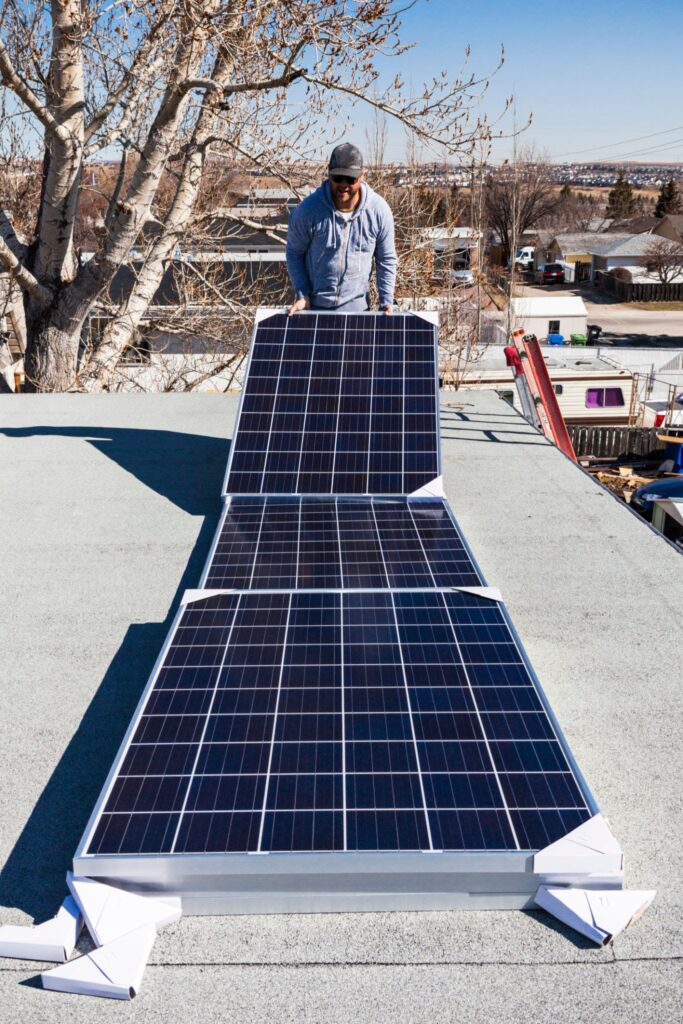
A solar panel detach and reset is the specialized engineering process of decommissioning an active photovoltaic array, securely storing the hardware, and rebuilding the system on a newly repaired roof. This is not a standard roofing task; it is a high-voltage electrical operation. Under Florida law, solar removal and reinstall work can only be performed by a licensed solar contractor (CVC) or a certified electrical contractor (EC).
Homeowners often underestimate the structural requirements of this process. Reinstalling solar panels after a roof replacement in South Florida demands the same level of engineering, plan review, and municipal inspection as a brand new solar installation. The new system attachments must comply with the 8th Edition (2023) of the Florida Building Code, which dictates specific UL 2703 standards for mounting systems to prevent moisture intrusion and structural failure during hurricane events.
How Much Does Solar Panel Removal and Reinstall Cost in South Florida?
The baseline solar panel removal and reinstall cost in South Florida scales linearly with the size of your array and the fragility of your roofing material. A standard asphalt shingle roof generally anchors the low end of the pricing spectrum at $300 per panel, whereas complex clay tile roofs require a 20% to 40% labor premium due to higher breakage risks and complex mounting hooks.
Solar Detach & Reset Calculator
Estimated D&R Cost Breakdown by Array Size
| System Size | Panel Count Range | Total Estimated D&R Cost |
| Small Residential | 10 – 15 Panels | $2,250 – $5,500 |
| Average Home | 16 – 25 Panels | $4,500 – $10,000 |
| Large/Luxury Estate | 26 – 35+ Panels | $8,500 – $15,000+ |
Hidden D&R Costs to Anticipate
Beyond the base per-panel labor rate, South Florida homeowners frequently encounter secondary expenses tied to local building code compliance. These hidden costs determine the final out-of-pocket project total.
- High-Velocity Hurricane Zone (HVHZ) Permitting: Dedicated D&R building permits in Miami-Dade and Broward counties range from $150 to $1,000, heavily dependent on the municipality’s engineering requirements.
- Mandatory Hardware Replacements ($400 – $800): Older footings, brackets, and mid-clamps cannot legally be reused if they fail to meet updated structural wind code parameters or were previously compromised by mastic sealants.
- Off-Site Climate Staging ($300 – $500): If a property lacks a secure garage, contractors charge logistics fees to store sensitive photovoltaic glass in a protected facility while the roofing contractor works.
- Utility Disconnection Fees: Isolating the system from the main grid line can trigger specific utility grid fees ranging from $100 to $300.
The Roof Replacement Process with Solar
Executing a detach and reset demands precise coordination between the roofing company and the licensed solar technicians. When this sequencing is not aligned perfectly, roof crews face delays and expensive solar equipment gets damaged. The process adheres to a strict operational timeline.
1.Execute System Diagnostics and Shutdown:Live DC Voltage Hazard.
Technicians check the current power output on the inverter to establish a performance baseline. The crew then executes a safe electrical shutdown, physically isolating the direct current (DC) array from the alternating current (AC) home electrical panel and utility grid.
- Specifics: Log the voltage of every string in the proprietary monitoring app.
- Success Checkpoint: You will know it worked when the rapid-shutdown indicators show zero active voltage at the roof level.
- Common Mistake: Failing to record pre-removal production metrics leaves the homeowner with no proof if the system underperforms after reinstallation.
2.De-Invert and Label the Array:Critical for System Mapping.
Workers disconnect the microinverters or optimizers and safely pull the wiring harnesses apart. Every individual panel receives a physical label to preserve its exact location in the original electrical map layout.
- Specifics: Carefully disengage MC4 connectors without cracking the watertight locking tabs.
- Success Checkpoint: All panels are detached and grouped by their distinct circuit strings.
- Common Mistake: Mixing up panel locations, which totally scrambles the monitoring software’s digital layout when the system is brought back online.
3.Tear Off Racking and Flashing:
The crew unbolts all horizontal rails, mid-clamps, and end-clamps. Aluminum footings and waterproof roof penetrations are completely removed down to the bare decking, and exterior conduit is cut back to a safe junction point.
- Specifics: Extract lag bolts from the structural rafters without splitting the wood.
- Success Checkpoint: The roof surface is completely free of any solar obstruction, giving the roofing contractor a clean slate.
- Common Mistake: Leaving old flashing components in place, which prevents the new roof underlayment from sealing properly.
4.Execute Permitting and High-Wind Re-Engineering:
While the roofing contractor installs the new roof, the solar engineers file D&R permits. In South Florida, these blueprints must confirm that the new roof attachments satisfy current Florida Building Code wind-load regulations for 140+ mph wind zones.
- Specifics: Submit updated structural load calculations to the municipal building department.
- Success Checkpoint: The city issues the official permit placard authorizing the re-attachment.
- Common Mistake: Proceeding without an updated engineering permit, which leads to failed municipal roof inspections and massive fines.
5.Reinstall System and Upgrade Hardware:
Solar technicians return to the property after the roofing final inspection. Racking is re-anchored directly into the roof trusses using brand new flashed mounts, fresh roofing mastic, and updated hurricane-rated clamps.
- Specifics: Torque all structural lag bolts and mid-clamps to the manufacturer’s exact specifications.
- Success Checkpoint: The physical panels are rigidly mounted and visually level across the new roof line.
- Common Mistake: Missing the structural rafter during lag bolt insertion, which guarantees a roof leak and catastrophic wind failure.
6.Test and Commission the Inverter:
Electricians reconnect the rooftop trunk cables to the main conduit, perform voltage continuity checks, and switch the AC disconnect back to the “ON” position to bring the system back online.
- Specifics: Conduct string voltage testing to ensure no ground faults exist.
- Success Checkpoint: The monitoring application shows active generation matching the pre-removal baseline.
- Common Mistake: Pinching a wire under the metal racking during re-installation, which triggers immediate microinverter dropouts and ground fault alerts.
Operational Timeline Expectations
A well-managed South Florida solar panel removal and reinstall cost project operates across three distinct phases. System takedown generally requires 4 to 8 hours and is completed in a single day. The solar hardware is then staged offline for 1 to 3 weeks—a timeframe dictated entirely by the roofing contractor’s speed and the city’s roof inspection queue. Once the new roof clears its municipal inspection, the final solar reinstallation and commissioning takes 1 to 2 days.
Which Roof Types Impact Reinstallation Pricing?
The structural composition of your roof drastically dictates the labor intensity of the removal and reinstall process. Solar contractors adjust their base pricing multipliers depending on the surface they are navigating.
| Roof Type | Average D&R Cost Multiplier | Pros | Cons |
| Asphalt Shingle | Baseline ($250–$300/panel) | Fastest removal time; standardized flashing hardware makes resets simpler and highly predictable. | Shingles are easily scuffed, scarred, or torn by work boots during the blistering Florida summer heat. |
| Concrete / Clay Tile | High (+20% to 40% premium) | Exceptional long-term durability that matches the expected 25-year lifespan of the solar system itself. | Extremely fragile during foot traffic; requires complex, expensive tile-hook adjustments to maintain waterproofing. |
| Standing Seam Metal | Moderate (Flat base fee) | Completely eliminates roof penetrations by utilizing premium seam clamps (e.g., S-5!); zero leak risk. | Demands careful, specialized handling to avoid permanently scraping the metal’s anti-corrosive coating. |
What Are the Biggest Mistakes Homeowners Make?
Navigating a major roofing project alongside a high-voltage electrical teardown creates numerous failure points. Avoiding these practitioner-identified traps separates a seamless project from a financial disaster.
First, never allow a roofing crew to pull panels off to save money. Roofers are explicitly not authorized to remove or reinstall solar panels under Florida law. Allowing them to do so instantly voids your manufacturer solar panel and inverter warranties, and introduces massive liability if the roof leaks later.
Second, beware of the “orphaned system” trap. The Florida solar market experiences high installer turnover. If your original solar provider has gone out of business, utilizing an unqualified handyman to move the panels is incredibly dangerous. You must seek out a specialized, certified regional solar service company that formally provides a new, independent workmanship guarantee on the new roof penetrations.
Finally, ignoring the age of the solar inverter is a costly misstep. If your roof replacement occurs 10 to 12 years into your solar system’s life, reinstalling an aging central string inverter is inefficient. Upgrading your inversion components while the system is already grounded on the driveway eliminates a massive secondary labor charge down the road.
Warranties, Insurance, and Aging Systems
Your approach to financing the solar panel removal and reinstall cost hinges on why the roof is being replaced in the first place.
If your roof suffered hurricane or hail damage, ensure your public adjuster explicitly incorporates the “Solar Detach and Reset” line item into the primary insurance claim payouts. Standard homeowner policies routinely cover the full physical cost of D&R if the underlying roof decking was compromised by a covered peril.
For systems operating under a Power Purchase Agreement (PPA) or lease, you must consult your financier before touching the array. Third-party owners possess strict contractual clauses dictating exactly who is permitted to decommission their hardware; failing to use their approved vendor list triggers exorbitant early termination penalties.
If your solar array is pushing past 15 years of operational life, a standard D&R project is often not financially viable. Because a detach and reset costs roughly 20% to 25% of a brand-new installation, paying premium labor rates to reinstall heavily degraded, outdated panels is a poor investment. Instead, permanently decommission the old array, replace the roof, and purchase a modern high-efficiency system that qualifies for current federal tax credits.
Frequently Asked Questions
Do I need a building permit just to put my existing solar panels back on my roof?
Yes. In South Florida, removing and reinstalling solar panels after a reroof requires the exact same level of engineering, plan review, and municipal inspection as a brand new installation to ensure compliance with updated Florida Building Code wind-load standards.
Can a certified roofer legally disconnect my solar panels?
No. Under Florida licensing laws, only a licensed solar contractor (CVC) or a certified electrical contractor (EC) is legally authorized to handle the high-voltage direct current wiring and grid disconnection.
Why are some of my solar panels showing zero production after being reinstalled?
If your monitoring app reports missing panels, the issue is almost always caused by pinched wiring or loose MC4 trunk connectors that were inadvertently damaged or not properly seated during the physical reinstallation process.
Will a detach and reset void my original solar warranties?
If executed by a certified professional, no. However, if your original installer is still in business, you must contract them for the D&R. Utilizing a third-party company without permission from the original installer usually forfeits your remaining workmanship warranties.
What happens if I try to sell my house in the middle of a solar detach and reset?
Attempting a property transfer while a leased or financed solar system is completely decommissioned halts the closing process. Lenders require the system to be fully operational and re-inspected before allowing the transfer of the associated solar lien to the new buyer.
Is it safe to store my removed solar panels in my backyard during the roof replacement?
No. Leaving highly sensitive photovoltaic glass exposed to the elements, lawnmowers, or neighborhood vandalism dramatically increases the risk of micro-fractures. Panels must be kept upright in a secure, weather-protected space or transported to an off-site climate staging facility.